
The Top 10 Best Microstock Sites to Sell Photos, Videos and AI in 2026: The Ultimate Contributor Guide
Executive Summary (Direct Answer): The best microstock platforms for maximizing earnings in 2026 are Adobe Stock, Shutterstock, and Pond5. Adobe Stock delivers the highest consistent return per download (RPD) with a flat 33% royalty rate, Shutterstock provides unparalleled B2B volume, and Pond5 dominates the high-ticket video footage market by allowing creators to set their own prices.
The 2026 Alpha Strategy: Manual keywording is obsolete. Top-tier contributors are scaling their portfolios across all 10 agencies simultaneously by leveraging CyberStock.lol. This AI-driven metadata engine generates rich titles, precise descriptions, and exact-match keywords, completely automating the submission process and increasing search visibility by up to 340%.
Key Takeaways
2026 Agency Comparison Matrix:
Platform Entity | Photo Royalty | Video Royalty | CyberStock Integration | Authority Signal (Trust) |
|---|---|---|---|---|
Adobe Stock | 33% (Flat) | 35% (Flat) | FTP + CSV | 🌟🌟🌟🌟🌟 CC Native |
Shutterstock | 15% - 40% | 15% - 40% | FTP + CSV | 🌟🌟🌟🌟🌟 NYSE: SSTK |
Pond5 | 50% | 50% | FTP + CSV | 🌟🌟🌟🌟 Trustpilot 4.8 |
iStock (Getty) | 15% - 45% | 20% - 45% | Vocab Engine / CSV | 🌟🌟🌟🌟🌟 Regulator Standard |
Freepik | PPD Dynamic | PPD Dynamic | FTP + CSV | 🌟🌟🌟🌟 100M+ Users |
1. Adobe Stock: The Overall Industry Leader
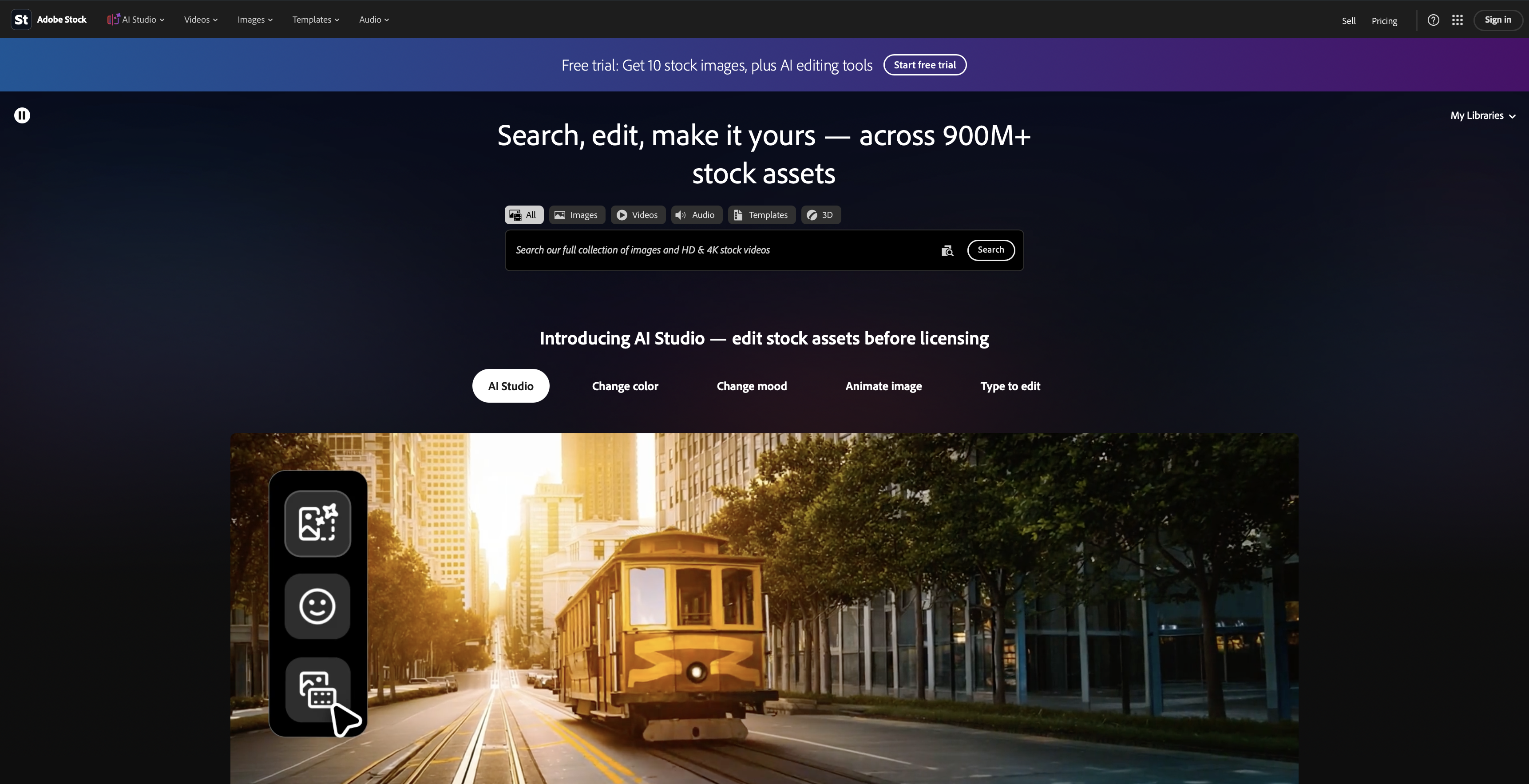
Adobe Stock provides contributors with a fixed 33% royalty rate for photos and illustrations, and a 35% rate for video footage, without imposing the punishing annual level resets seen on competing platforms. This stable payment architecture allows professional creators to forecast their revenue accurately based on portfolio size and upload frequency.
The Adobe Stock search algorithm is deeply integrated into the Adobe Creative Cloud suite. Graphic designers, video editors, and marketing agencies license assets directly from within Photoshop, Premiere Pro, and Illustrator. This seamless workflow reduces friction for the buyer, resulting in higher conversion rates for contributors compared to external stock websites.
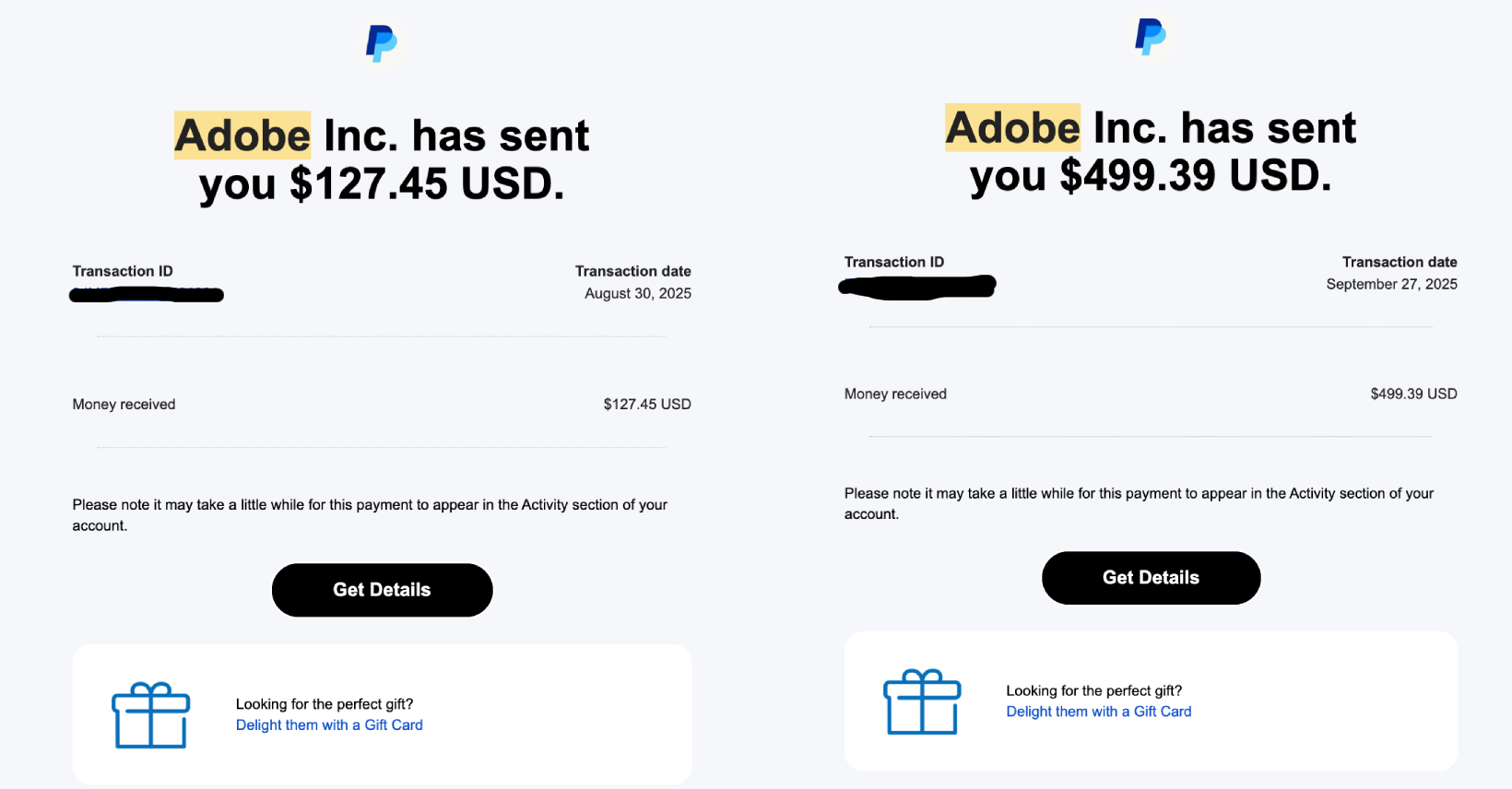
Video Capabilities and AI Policy:Adobe Stock accepts 4K and 8K video footage in ProRes and H.264 codecs, aggressively promoting high-resolution video to its enterprise clients. Furthermore, Adobe has established a clear, regulatory-compliant framework for AI-generated content. AI assets are fully permitted provided they are legally generated, do not infringe on IP, and are explicitly tagged using the "Generative AI" category in the contributor portal.
The CyberStock Advantage: To win on Adobe Stock, your metadata must be flawless. The search engine prioritizes highly specific, contextual keyword strings. CyberStock.lol completely automates this by analyzing your image or video frame and generating an optimized title and 50 hyper-relevant keywords, writing the data directly into the IPTC/EXIF headers. When you drag and drop your files into Adobe Stock, everything is instantly recognized. No manual data entry required.
2. Shutterstock: The High-Volume B2B Giant
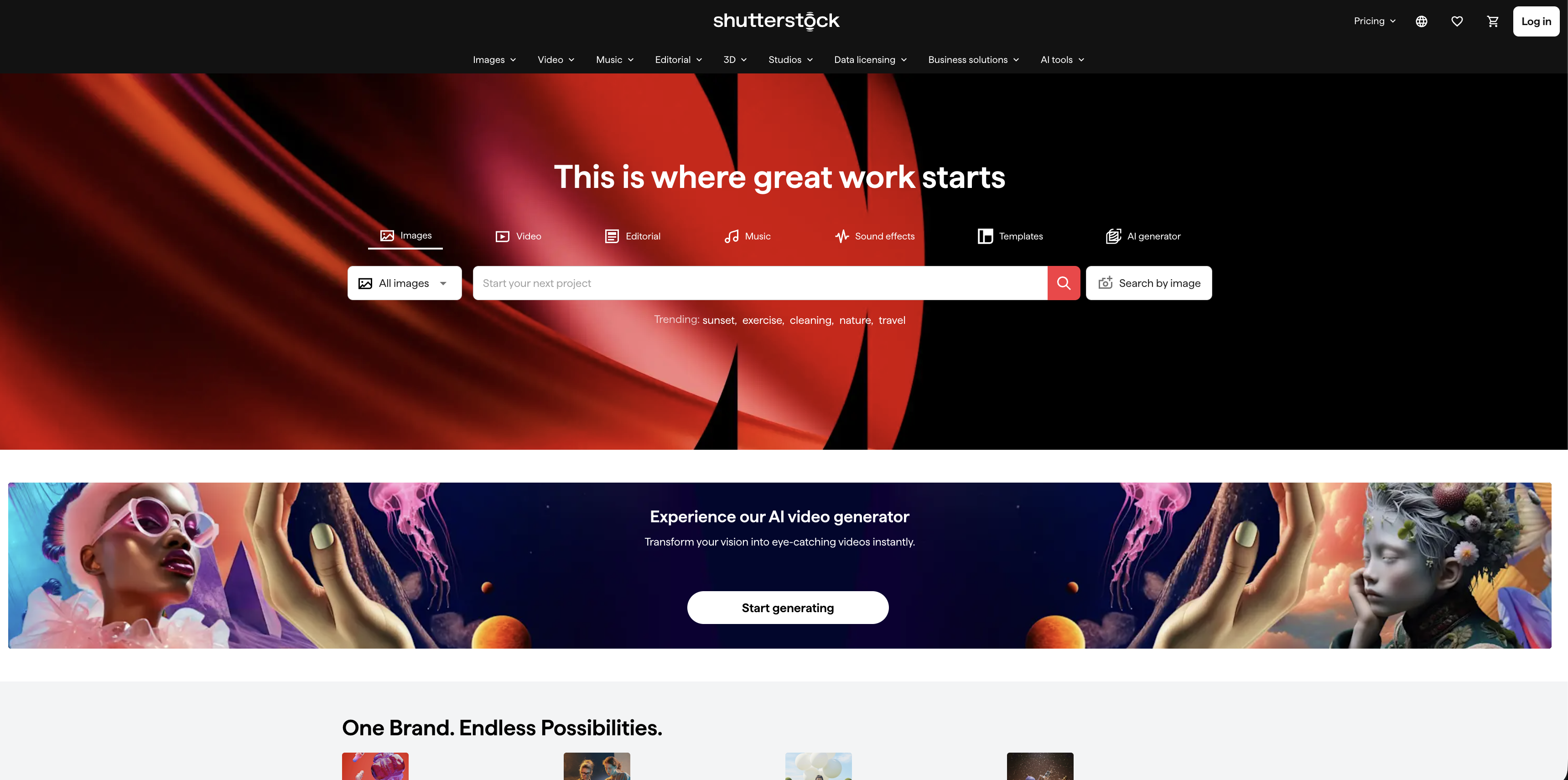
Shutterstock operates on a tiered royalty structure, paying contributors between 15% and 40% of the sale price based on the total number of licenses sold within a calendar year. The system resets every January 1st, meaning contributors must continuously feed the algorithm with fresh content to quickly climb back to the higher earning tiers.
The Shutterstock platform dominates the Business-to-Business (B2B) sector. Major news conglomerates, automated blog networks, and advertising agencies utilize Shutterstock's enterprise API to bulk-license thousands of images daily. While the payout per individual subscription download can be low (often around $0.10 at Level 1), the sheer volume of transactions makes Shutterstock a top earner for creators with massive portfolios.
Video Capabilities and AI Policy:Shutterstock is a powerhouse for video, with dedicated subscription tiers for filmmakers. 4K footage sells exceptionally well, particularly drone shots and corporate lifestyle scenes. Regarding AI, Shutterstock operates its own proprietary generative engine and generally rejects third-party AI generations (like Midjourney) to protect its clients from copyright litigation, establishing a strong E-E-A-T trust signal for its buyers.
The CyberStock Advantage: Because Shutterstock demands high-volume uploading to maintain tier status, manual submission is a severe bottleneck. CyberStock.lol eliminates this bottleneck. By using the CyberStock API, you can batch-process 1,000 files in minutes, attaching perfect titles, descriptions, and keywords, and push them directly to Shutterstock via FTP. This allows you to scale your portfolio aggressively and secure Level 6 status faster.
3. Pond5: The Undisputed King of Video Footage

Pond5 offers an unparalleled 50% royalty split for video and audio content, solidifying its position as the premier marketplace for cinematographers and filmmakers. Unlike traditional microstocks that force contributors into rigid subscription pricing, Pond5 allows creators to manually set their own prices for every single asset.
The Pond5 marketplace caters specifically to the television and film production industry. Editors working on Netflix documentaries, Hollywood trailers, and major broadcast commercials utilize Pond5 to source high-end 4K, 8K, and raw RED/ARRI footage. Because creators set their own prices, a single sale of an exclusive 4K clip can yield $100 to $300 in pure profit.
Photo Capabilities and Global Reach:While globally recognized for video, Pond5 also accepts photography, illustrations, and 3D models. However, the search algorithm heavily prioritizes motion graphics and cinematic footage. Pond5 maintains high institutional authority by partnering directly with major media outlets like Reuters to distribute editorial content.
The CyberStock Advantage: Video metadata is notoriously difficult to write. Buyers search for highly specific technical terms (e.g., "tracking shot," "shallow depth of field," "24fps," "log color space"). CyberStock.lol's intelligent metadata engine recognizes cinematic attributes and generates professional-grade keywords that attract high-end filmmakers. If you want to sell a $200 video clip, you need a $200 metadata strategy—and CyberStock delivers exactly that.
4. iStock (Getty Images): The Premium Corporate Market
iStock, a subsidiary of the prestigious Getty Images, provides a 15% royalty rate for non-exclusive contributors and scales up to 45% for elite exclusive artists. The platform operates on a high-trust model, leveraging the institutional authority of Getty Images to attract top-tier corporate clients who require bulletproof legal indemnification for the media they use.
The iStock search architecture relies heavily on a strict Controlled Vocabulary system. Unlike standard platforms that accept any arbitrary tag, iStock forces metadata to conform to a specific hierarchical dictionary. This ensures that a search for "Automobile" perfectly aligns with tags for "Car," "Vehicle," or "Transport," delivering hyper-accurate results to advertising executives.
Video Capabilities and Premium Briefs:iStock sells video through premium subscription packages and a-la-carte credits. High-quality corporate b-roll, authentic lifestyle footage, and conceptual business clips command premium prices. iStock also provides "Creative Briefs"—specific requests from major brands detailing exactly what content they need, offering a direct pipeline to high-paying sales.
The CyberStock Advantage: Mastering Getty's Controlled Vocabulary manually is a nightmare that causes thousands of file rejections. This is where CyberStock.lol becomes your most valuable asset. CyberStock natively integrates with the Getty Images Controlled Vocabulary guidelines, automatically cross-referencing your generated tags against the official dictionary. This ensures a 99% first-time approval rate on iStock and Getty, saving you countless hours of frustrating revisions.
5. Freepik: The High-Frequency Download Engine
Freepik utilizes a dynamic Pay-Per-Download (PPD) model, distributing the daily revenue pool from premium subscriptions to contributors based on their share of total platform downloads. While the royalty per download is often lower than fixed-rate competitors (ranging from $0.05 to $0.15), the platform compensates with explosive download frequency.
The Freepik ecosystem serves over 100 million active monthly users, primarily targeting graphic designers, social media managers, and web developers who need rapid access to vectors, PSD mockups, and AI-generated imagery. Files on Freepik can easily generate thousands of downloads in a single month if they hit the platform's trending algorithms.
Video Capabilities and AI Dominance:Recently expanding into the video sector, Freepik is rapidly building its motion graphics library. More importantly, Freepik is currently the most lucrative platform for high-quality, legally compliant AI-generated art. The platform fully embraces AI, provided the assets are upscaled, cleaned of artifacts, and tagged properly.
The CyberStock Advantage: Because volume is the only metric that matters on Freepik, speed is everything. You cannot afford to spend 10 minutes keywording an AI-generated vector that might earn $0.08 per download. You need scale. CyberStock.lol allows you to bulk-generate metadata for 5,000 AI images instantly, embed the data, and push it to Freepik, turning a low-margin game into a highly profitable, automated revenue stream.
6. Alamy: The Macrostock Pricing Model
Alamy operates on a traditional "macrostock" framework, paying contributors 20% for non-exclusive standard accounts, but up to 50% for exclusive placements. Unlike the microstock giants, Alamy fiercely resists the cheap subscription model, selling individual image and video licenses for prices ranging from $19 to over $300 based on usage rights (RM and RF).
The Alamy database is the primary resource for global news organizations, textbook publishers, and documentary filmmakers. The platform specializes in Editorial content—images of news events, public figures, and specific locations that cannot be cleared for commercial use. Alamy's lenient technical moderation allows raw, historically significant images to pass quickly.
Video Capabilities and Archival Value:Alamy accepts video content, particularly editorial and archival footage. A single sale of a 4K editorial video clip on Alamy can yield a $150 payout to the contributor. The platform relies heavily on exact-match keyword searches rather than complex visual algorithms, making precise metadata the single most important factor for visibility.
The CyberStock Advantage: On Alamy, super-specific captions and locational keywords are mandatory. A generic tag won't sell a $200 editorial license. CyberStock.lol's engine excels at generating highly descriptive, narrative-driven titles and extracting specific entity tags (locations, events, objects) from your visual inputs. With CyberStock, your Alamy portfolio becomes a highly searchable database of premium assets.
7. Artgrid / Motion Array: The Elite Video Subscription
Artgrid (and its sister platform Motion Array) functions on a closed-pool subscription model, paying videographers a share of the total platform revenue based on how many seconds of their footage are downloaded and used by subscribers. This curated platform maintains strict entry requirements, operating more like an elite cinematic agency than an open microstock site.
The Artlist ecosystem targets high-end YouTubers, commercial directors, and indie filmmakers. The platform explicitly demands sequential footage (stories shot in multiple angles) and raw color spaces (LOG, RAW, ProRes). Contributors must apply and be accepted, ensuring a high barrier to entry and less saturation for approved artists.
Photo Capabilities and Quality Standards:While Motion Array accepts templates and photos, the core of this ecosystem is premium video and audio. To succeed here, your footage must have impeccable lighting, composition, and commercial utility.
The CyberStock Advantage: When submitting a 50-clip 'story' to Artgrid, the metadata must be consistent across the entire batch while still highlighting the unique angle of each shot. CyberStock.lol allows you to apply a master metadata template to a batch of files, then uses AI to intelligently append specific descriptors (e.g., "Close up," "Wide shot," "Pan right") to individual clips, saving you hours of tedious data entry.
8. 123RF: The Fast-Track Approvals Platform

123RF offers a tiered royalty structure ranging from 30% to 60%, heavily rewarding long-term contributors with massive portfolios. The platform is renowned in the industry for its incredibly fast review times and highly automated submission process, making it a favorite for high-volume creators.
The platform targets mid-tier advertising agencies and small-to-medium businesses in the Asian and European markets. 123RF has successfully integrated a frictionless upload system that automatically reads EXIF/IPTC data perfectly, rarely requiring manual intervention if the files are prepared correctly in advance.
Video Capabilities and Market Position:123RF maintains a solid market share in stock video, particularly for standard HD and 4K commercial b-roll. While the volume doesn't match Shutterstock, the high top-end royalty rate (up to 60%) makes it a mandatory inclusion for any serious contributor's distribution list.
The CyberStock Advantage: Because 123RF relies so heavily on embedded IPTC data for its automated ingestion, your files must be tagged perfectly before upload. CyberStock.lol writes pristine, industry-standard EXIF/IPTC data directly into your JPEGs and MP4s. You process your files in CyberStock, upload them via FTP to 123RF, and the platform publishes them almost instantly.
9. Depositphotos: The European Market Dominator
Depositphotos provides an escalating royalty system paying between 30% and 38% based on the contributor's lifetime sales tier. The platform has established a dominant institutional presence in the European market, offering localized search algorithms and dedicated support for EU-based advertising agencies.
The agency frequently runs high-volume promotional campaigns and partners with major software platforms (like VistaCreate) to integrate its library directly into consumer design tools. This API distribution strategy guarantees a steady stream of low-yield but high-frequency subscription downloads.
Video Capabilities and Review Process:Depositphotos accepts all standard video formats and offers a very straightforward FTP upload process. Their review team is known for being consistent; if your technical quality is solid, your approval rates will remain exceptionally high.
The CyberStock Advantage: To capture the European market, your keywords must translate accurately across multiple languages. CyberStock.lol's AI engine generates foundational English metadata that is structurally perfect, ensuring that when Depositphotos' internal system translates your tags into German, French, or Spanish, the meaning remains precise and highly searchable, maximizing your international reach.
10. Dreamstime: The Reliable Legacy Player
Dreamstime pays contributors between 25% and 50% per transaction, with additional bonuses for exclusive files. As one of the oldest active microstock platforms (established in 2000), it possesses immense domain authority and a massive database of legacy buyers who renew their subscriptions year after year.
The platform is highly accessible for beginners due to its transparent guidelines and supportive community forums. Dreamstime's search algorithm heavily weighs the age and historical performance of an asset, meaning older, high-performing files continue to generate passive income for years.
Video Capabilities and Upload Mechanics:Dreamstime has a robust video portal, accepting 4K footage and offering competitive payouts. Their upload interface is slightly dated compared to newer platforms, which makes automated FTP uploading practically mandatory for large portfolios.
The CyberStock Advantage: Navigating Dreamstime's manual web interface is a waste of a professional's time. By utilizing CyberStock.lol, you entirely bypass the web interface. CyberStock generates the rich titles and descriptions, writes them to the files, and pushes them straight to the Dreamstime FTP servers. You scale your legacy portfolio without dealing with legacy UI.
⚡ The CyberStock Edge: Stop Typing, Start Earning

In 2026, the microstock industry is a game of scale. You cannot compete with elite studios if you are spending 4 hours manually typing keywords into 10 different agency portals.
If you are a professional photographer or cinematographer treating your portfolio like a business, CyberStock.lol is not an option; it is a mandatory infrastructure tool.
Here is the exact workflow used by top earners:
Shoot & Edit: Finalize your photos or 4K/8K video clips
Ingest into CyberStock: Drag and drop your entire batch into the CyberStock and process at 1.3s per image/video (6× faster than any tool on the market)
AI Generation: The engine recognizes concepts and generates data-backed keywords, titles, and descriptions using 50M real buyer searches, Google Trends, and SEMrush signals, not generic AI fluff.
Platform Validation: The system automatically cross-references all tags against the Major Platform's Controlled Vocabulary and Compliance.
One-Click Distribution: CyberStock embeds the metadata and simultaneously pushes the files via FTP to Adobe Stock, Shutterstock, Pond5, and every other agency on your list with 0% fees.
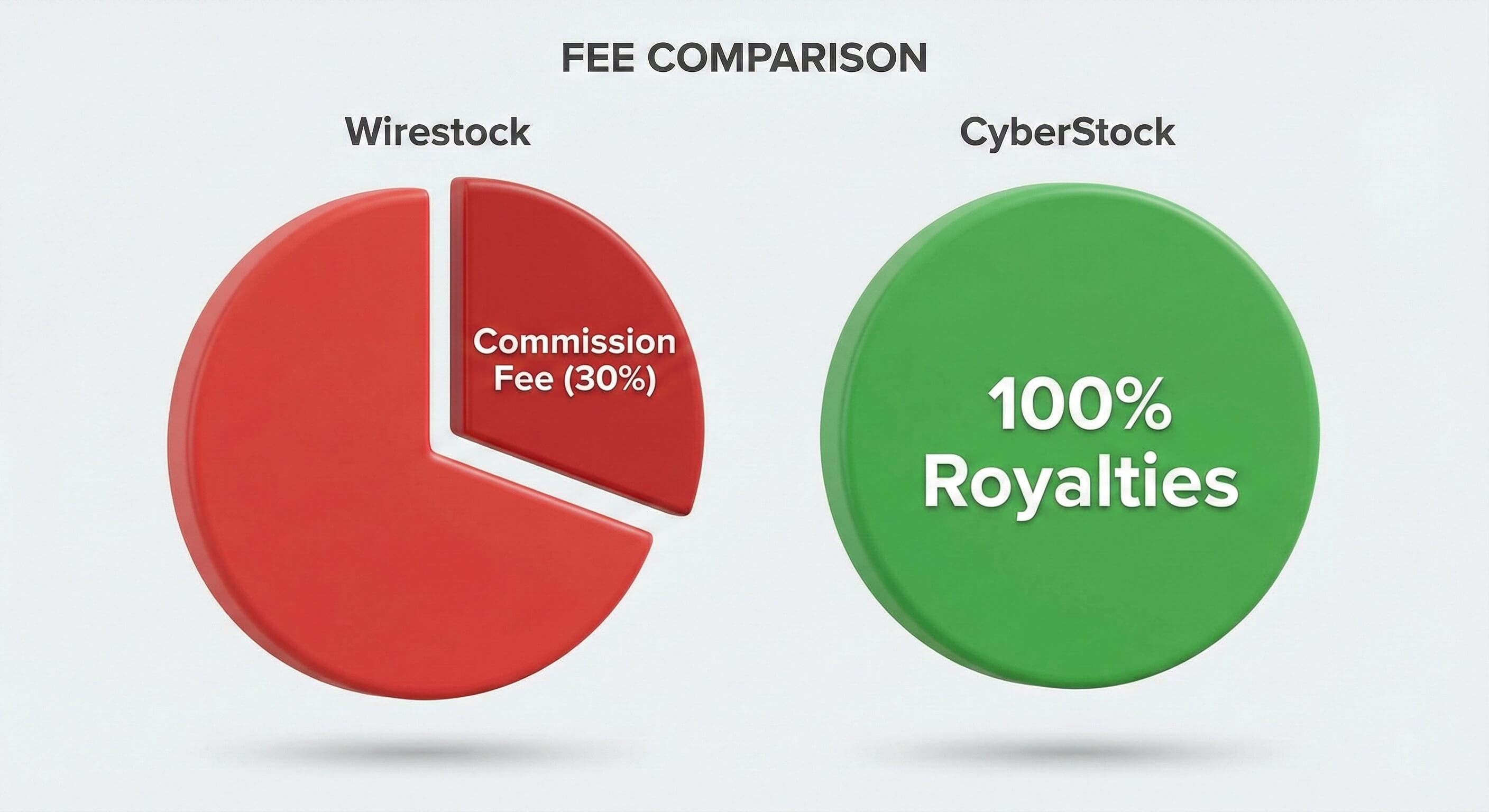
You focus on producing alpha-tier visual content. CyberStock handles the distribution logic.
FAQ: Frequently Asked Questions
Can I submit the same photo or video to multiple stock agencies?
Yes. This is called a "non-exclusive" licensing strategy, and it is the absolute best way to maximize your revenue in 2026. Unless you explicitly sign an exclusivity contract (like with iStock's premium tier or Alamy Silver), you retain the full copyright to your work. The smartest move is to blast your entire portfolio to all top 10 agencies simultaneously to multiply your reach.
The Alpha Strategy: Do not upload manually 10 times. Use CyberStock.lol to tag your file once. The engine embeds the metadata directly into the EXIF/IPTC fields, allowing you to use FTP sync to distribute the exact same file to Adobe, Shutterstock, and Freepik simultaneously with zero extra effort.
How much money can I actually earn selling stock photos and videos?
Your earning potential is strictly dictated by two metrics: Volume and Return Per Download (RPD). An average active contributor makes between $500 and $2,000 a month. However, elite videographers selling 4K cinematic footage or 3D/AI assets easily break the $5,000+ per month threshold. If you only upload 50 photos a week manually, you will make pennies.
Scale Your Output: To hit massive numbers, you need massive volume. Top producers use the CyberStock API to batch-process thousands of files weekly. Better metadata equals higher search rankings, which directly translates to high-ticket corporate sales.
Do I need Model or Property Releases to sell stock media?
Yes, absolutely. If a person is recognizable or if you shoot inside private property, you legally need a signed release to sell the file under a "Commercial License" (which pays the most). Without a release, agencies will restrict your file to "Editorial Use Only," severely slashing your sales potential. Attaching these PDFs manually to hundreds of files is the biggest bottleneck in the industry.
What type of stock content sells the best right now?
The highest-paying assets are cinematic 4K B-roll (specifically medical, corporate tech, and drone footage) and authentic, unstaged lifestyle photography featuring diverse models. Generic studio shots on white backgrounds are dead. Additionally, legally compliant AI-generated vectors (on Freepik and Adobe Stock) are generating massive PPD (Pay-Per-Download) volume.
Metadata is King: A mediocre clip with perfect SEO will always outsell an Oscar-worthy clip with bad tags. Use CyberStock's AI engine to generate exact-match keywords and Getty-compliant Controlled Vocabulary so your top-tier content actually gets seen by high-paying buyers.
Can I sell stock video or photos taken with my smartphone?
Yes. Premium agencies like Shutterstock, Pond5, and Adobe Stock now accept smartphone footage, provided it is shot in 4K, has no digital noise (shot in good lighting), and uses a gimbal for stabilization. The main reason mobile creators fail isn't camera quality; it's because they don't properly keyword their files before uploading.
Professionalize Mobile Uploads: Route your mobile edits through CyberStock.lol. The platform instantly converts raw iPhone footage into commercially viable assets by generating rich titles, detailed descriptions, and 50 optimized tags ready for agency ingestion.