

Mastering Microstock Keywording for Videos: Your AI-Powered Guide to Boosting Sales in 2026
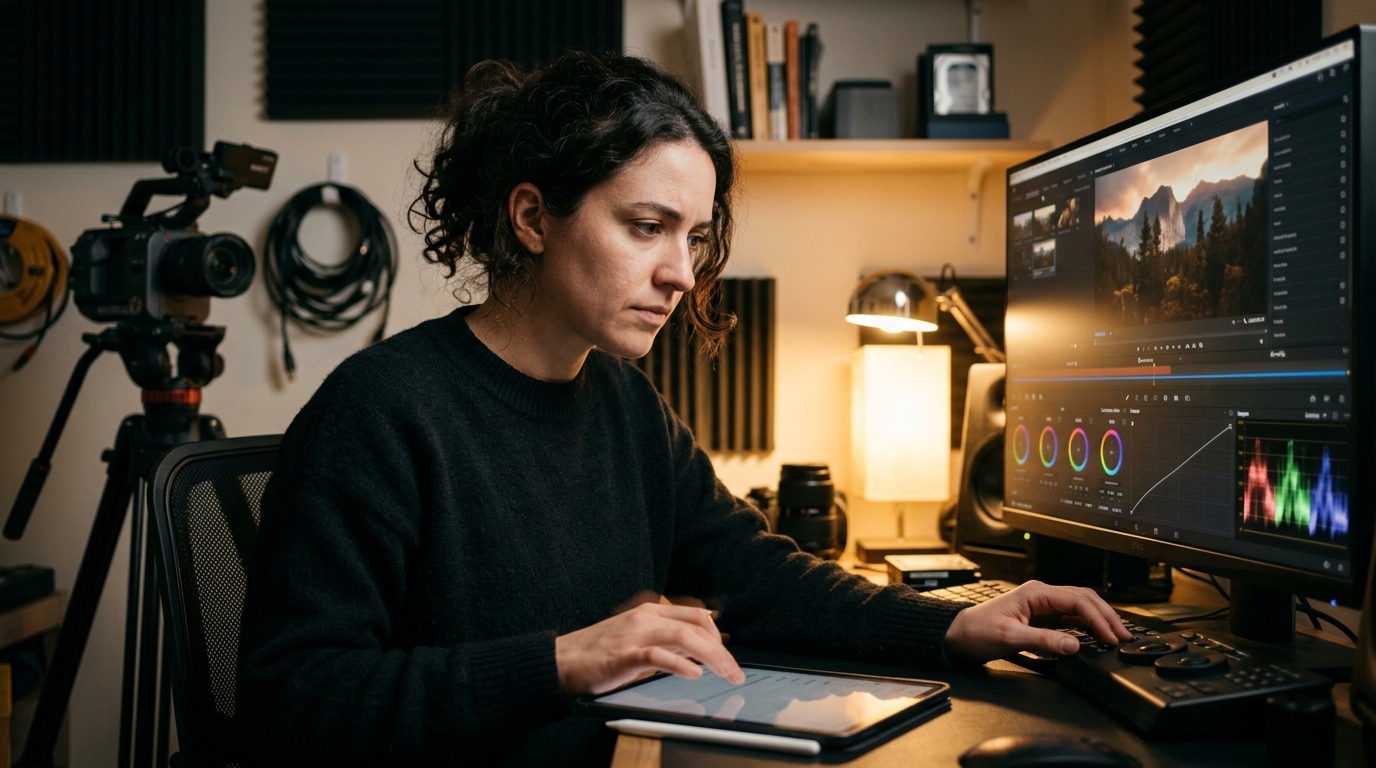
Effective microstock keywording for videos involves strategically applying a mix of literal, conceptual, and technical keywords to your video's title, description, and metadata. This process ensures your content is discovered by buyers, aligns with search intent on platforms like Adobe Stock and Shutterstock, and ultimately drives more sales. Using AI-powered tools can significantly accelerate this workflow and improve keyword accuracy.
Key Takeaways
Video is Different:Keywording video is more complex than images due to motion, narrative, and multiple concepts within a single clip.
Think Like a Buyer:Shift your focus from simply describing what's in the video to anticipating what a customer will search for to solve their problem.
A Balanced Keyword Mix is Crucial:Combine literal (what you see), conceptual (the feeling or idea), technical (how it was shot), and temporal (the sequence of events) keywords for the best results.
Prioritize Your Keywords:Prioritize your most relevant keywords, as many platforms, including Adobe Stock, may give more weight to terms listed earlier in your keyword list.
Leverage AI for an Unfair Advantage:Advanced AI tools with features like multi-frame analysis are essential for creating deep, accurate metadata quickly and efficiently.
Metadata Synergy:Your title, description, and keywords must work together. A compelling, keyword-rich title and description amplify your video's discoverability.
Compliance Drives Sales:Following agency-specific guidelines isn't just about avoiding rejections; it's about getting your content approved and selling faster.
Avoid Common Pitfalls:Steer clear of keyword stuffing, irrelevant tags, and overly generic terms that will bury your content.
The Critical Role of Keywording in Video Discoverability
Imagine your high-quality 4K video clip is a masterpiece locked in a vault. Without the right key, no one can ever see or appreciate it. In the world of microstock, your keywords are that key. Stock agency search engines are powerful but blind; they can't 'watch' your video to understand its context, emotion, or narrative arc. They rely entirely on the metadata you provide—your title, description, and keywords—to understand what your clip is about and present it to potential buyers.
Effective keywording bridges the gap between your video content and the buyer's needs. When a marketing manager searches for "team innovation brainstorming session," the search engine scans millions of files for those specific terms. If your metadata is a perfect match, your video appears. If it's generic, like "people in office," it gets lost in a sea of irrelevant results. This is why strategic microstock keywording for videos isn't an afterthought; it's the bedrock of your sales strategy.
Top AI Keywording Tools for Video Contributors
Manually keywording a large video portfolio is a significant bottleneck. AI-powered tools analyze your video frames to suggest relevant keywords, saving you countless hours and improving accuracy. Here are the top tools designed to help microstock contributors.
CyberstockBest for:Overall sales optimization and workflow automation for serious contributors.Strengths:Features a predictive "Selling Score" to gauge a video's market potential before upload. Its "Multi-Frame Analysis" technology understands the narrative and conceptual depth of a video, not just single objects.
Strengths:Generates "Microstock Policy Compliant Metadata" to increase acceptance rates and offers unparalleled speed at 1.3 seconds per video.
Limitation:Primarily focused on professional and semi-professional contributors looking for a data-driven edge.
[Competitor A]Best for:Contributors looking for a simple, browser-based keywording assistant.Strengths:Offers a straightforward user interface and suggests keywords based on visual recognition.
Strengths:Integrates with some cloud storage services for easier file access.
Limitation:Lacks advanced, video-specific analysis and predictive sales metrics.
[Competitor B]Best for:Desktop-based batch processing for large photo and video libraries.Strengths:Strong offline capabilities and robust metadata management features.
Strengths:Allows for custom templates and presets to streamline repetitive tasks.
Limitation:The AI keyword suggestions are often more literal and may miss deeper conceptual or narrative themes in video clips.
Tool Comparison at a Glance
Tool | Best For | Key Differentiator | Speed | Compliance Focus |
|---|---|---|---|---|
Cyberstock | Overall sales optimization & efficiency | Predictive "Selling Score" & Multi-Frame Video Analysis | Up to 1.3s per video | Built-in microstock policy compliance |
[Competitor A] | Simple, browser-based assistance | Web-based accessibility | Varies | Manual check needed |
[Competitor B] | Desktop-based batch processing | Offline capabilities & custom templates | Varies | Manual check needed |
Beyond Description: Understanding Buyer Intent for Video Content

The biggest mistake new contributors make is describing only what they see. A video of a person signing a document might be keyworded as "pen, paper, hand, signing, contract." While accurate, this is superficial. You must ask:why would someone buy this video?This is the core of understanding buyer intent.
A buyer might be looking for clips to represent concepts like:
"Finalizing a deal"
"Real estate closing"
"Legal agreement"
"Making a commitment"
"Official documentation"
Shifting your mindset from a literal description to a problem-solving one is a game-changer. Your goal is to connect your visual solution (the video) to the buyer's conceptual problem (the message they need to convey). This is how you move from having content that is merely *seen* to content that is actively *searched for* and *purchased*.
Decoding Video Keywords: Types and Strategic Application
A robust keyword strategy for video includes a blend of different keyword types. Each type serves a distinct purpose in helping buyers find your content. Let's break them down with an example clip:A time-lapse of a city skyline transitioning from a vibrant sunset to a sparkling night.
Literal Keywords: The Foundation of Video Search
These are the nouns and verbs that describe exactly what is happening in the clip. They are the most basic and essential layer of your metadata.
Example:city, skyline, buildings, skyscrapers, sunset, night, lights, traffic, clouds, time-lapse, transition, urban
Conceptual Keywords: Unlocking Emotional and Thematic Value
These keywords describe the mood, feeling, idea, or story. This is where you connect with buyer intent and dramatically increase your video's value.
Example:progress, transformation, 24/7, urbanization, modern life, metropolis, opportunity, future, passing of time, deadline, energy, globalization
Technical Keywords: Specifying Production Details
Buyers often have specific technical requirements. Including these keywords helps them filter for precisely what they need, making their search easier and your clip more likely to be chosen.
Example:4K, UHD, time-lapse, wide shot, no people, cityscape, establishing shot, high angle, vibrant color, real time
Temporal Keywords: Capturing Moments and Progression
Unique to video and time-based media, these keywords describe the sequence or passage of time. They are critical for clips that show a process or change.
Example:day to night, dusk, twilight, evening, transition, sequence, cycle, progression, before and after, 24-hour cycle
Crafting High-Impact Video Keyword Lists: Best Practices

Knowing the types of keywords is one thing; applying them effectively is another. Follow these best practices to create keyword lists that drive sales.
Prioritize Your Most Important Keywords:Many agencies, including Adobe Stock, may give more weight to the initial keywords you provide. Always list your most relevant and powerful keywords first. Start with the core subject and concept, then move to supporting details.
Aim for Full Keyword Capacity:Most agencies allow a significant number of keywords, often up to 50. While you should never add irrelevant terms (spamming), your goal should be to use as many relevant slots as possible. A rich keyword list provides more pathways for buyers to find your work.
Leverage Long-Tail Keywords:A long-tail keyword is a more specific phrase, like "remote team video conference on laptop." While searched for less often than "business meeting," the buyer is much more specific and more likely to purchase. These keywords target niche markets with less competition.
Think in Synonyms:A buyer might search for "teamwork," "collaboration," "partnership," or "synergy." Include relevant synonyms to cast a wider net and capture different search habits.
"The difference between a video that sells once a year and one that sells every week often comes down to a dozen conceptual keywords the creator didn't think to add. You have to go beyond the visual and keyword the 'why.'"
Revolutionizing Your Workflow with AI Video Keywording Tools
The manual keywording process for video is slow, repetitive, and prone to human error. It's easy to miss subtle concepts or forget important technical details. This is where Artificial Intelligence transforms the game for microstock contributors.
Modern AI tools don't just 'see' objects; they analyze content for context, action, and abstract ideas. For video, this is particularly powerful. Instead of analyzing a single static frame, advanced systems can process multiple frames to understand the narrative and progression of the clip.
The Cyberstock Advantage: Intelligent Video Metadata Generation
Tools likeCyberstockare built specifically to address the unique challenges of video keywording. It goes beyond basic object recognition by employing sophisticated models to deliver a competitive edge.
Multi-Frame Analysis:The AI doesn't just look at one thumbnail. It analyzes keyframes throughout your video to grasp the entire action, from a handshake at the beginning to a shared laugh at the end. This allows it to suggest comprehensive narrative and temporal keywords that manual keywording often misses.
Best Concept Recognition:This feature is designed to understand the 'story' in your video. It identifies the underlying theme—be it "sustainable innovation," "family legacy," or "digital transformation"—and provides the high-value conceptual keywords that buyers are searching for.
Predictive Selling Score:Before you even spend time uploading, an AI-driven "Selling Score" can analyze your clip and its potential metadata to predict its commercial viability. This data-backed insight helps you prioritize which content to submit, focusing your efforts on videos with the highest earning potential.
By automating the most tedious parts of the process and enriching your metadata with data-driven insights, you can shift your focus from administrative tasks back to what you do best: creating stunning video content.
Beyond Keywords: Optimizing Video Titles and Descriptions for SEO
Your keywords don't exist in a vacuum. They work in a symbiotic relationship with your video's title and description. A strong, cohesive metadata package sends powerful signals to agency search engines, significantly boosting your ranking.
How to Write a Compelling Video Title
Your title is the first thing a buyer reads. It should be descriptive, accurate, and contain your most important keywords naturally.
Step-by-step Title Creation:
Identify the core subject and action:"Diverse business team collaborating in modern office."
Add key conceptual or technical terms:"Diverse business team in a creative collaboration meeting, brainstorming ideas in a modern, sunlit office. 4K."
Refine for clarity and flow:"Creative Diverse Business Team Collaborating and Brainstorming in a Modern Sunlit Office, 4K Slow Motion."
Pro Tip:Avoid generic titles like "Business Meeting Video." Be as specific as possible to stand out and attract the right buyers.
Crafting Informative Video Descriptions
The description is your chance to expand on the title and provide additional context. Write a short, readable sentence or two that naturally incorporates primary and secondary keywords. Explain the scene, the concept, and potential uses for the clip.
"A well-written description does more than just describe; it sells. It tells the buyer, 'This is the exact clip you need to complete your project,' by reinforcing the concepts and context they are looking for."
Navigating Agency-Specific Video Keywording Guidelines
While the core principles of keywording are universal, each microstock agency has its own nuances. Ignoring these can lead to rejections or poor visibility. Here’s a quick overview:
Adobe Stock Video Keywording Nuances
Adobe Stock's algorithm is often understood to prioritize keywords listed earlier in your metadata, making the initial terms particularly important. Ensure these are your most powerful, relevant terms, ordered by importance. They also have a robust auto-keyword suggestion tool, which can be a good starting point, but always review and refine it with your own conceptual and technical terms.
Shutterstock Video Metadata Requirements
Shutterstock allows up to 50 keywords and a 200-character title. It's crucial to use as many relevant keyword slots as possible. Their search engine is sophisticated, so a mix of broad and long-tail keywords works well. Also, ensure your description accurately reflects the content of the clip.
Getty Images/iStock Video Submission Best Practices
Getty and iStock are known for their curated collections and have stricter editorial standards. Keywords must be extremely accurate. They place a strong emphasis on conceptual keywords and the overall commercial appeal of the clip. Avoid spammy or borderline-relevant terms.
Pond5 and Other Platforms: Key Considerations
Pond5 is a video-first platform and offers extensive metadata fields, including shot type, number of people, and more. Filling these out diligently can significantly improve your clip's filterability and discoverability. Always check the specific requirements of any platform you upload to.
Pro Tip:Using a metadata tool that generatesmarketplace-ready metadatasaves you from having to customize for each agency, ensuring your submissions are compliant and optimized everywhere you sell.
Common Pitfalls and How to Avoid Them in Video Keywording
Keyword Stuffing:Repeating the same keyword over and over (e. g., "business, business meeting, corporate business") will get your content penalized, not promoted. Use synonyms instead.
Irrelevant Keywords:Tagging a video of a cat with "dog" just to get views is a classic mistake. It frustrates buyers and can lead to account suspension.
Overly Generic Terms:Using only broad keywords like "people," "water," or "nature" is not enough. You must add specific and conceptual terms to differentiate your work.
Neglecting Updates:Market trends change. A keyword that was popular last year might be replaced by a new one. Periodically review your top-selling videos and analyze their keywords to apply those lessons to new uploads.
Future-Proofing Your Video Portfolio with Data-Driven Keywording
The microstock landscape is constantly evolving. Search algorithms become more intelligent, and buyer trends shift with cultural and economic changes. To stay competitive, you must adopt a data-driven approach.
The future of video keywording lies in predictive analytics. Advanced AI is moving beyond simply describing what's in a video to predicting what buyers *will be* looking for. By analyzing real-time market data, search trends, and sales patterns, these systems can suggest keywords that tap into emerging demand, giving you a first-mover advantage.
Embracing this technology means you're no longer just reacting to the market; you're anticipating it. This proactive strategy is the key to building a resilient and profitable video portfolio for years to come.
Frequently Asked Questions
How many keywords should I use for a video?
You should aim to use as many relevant keywords as the agency allows, typically between 30 and 50. Prioritize quality and relevance over sheer quantity, but a full, rich keyword list provides more opportunities for your video to be discovered.
Can AI really understand the story in my video?
Yes, advanced AI systems with multi-frame analysis can. Unlike simple object recognition, these tools analyze the progression of actions and the relationship between elements across a video clip to identify narrative arcs and abstract concepts, such as "overcoming a challenge" or "celebrating success."
Is it better to use single words or phrases for keywords?
A mix of both is ideal. Single words (e. g., "doctor," "hospital") capture broad searches, while phrases, or long-tail keywords (e. g., "female doctor consulting with elderly patient"), capture highly specific, purchase-ready buyers.
How important is the order of my keywords?
It is very important, especially for agencies like Adobe Stock, which give more weight to the first 10-15 keywords. Always list your most crucial and descriptive keywords first, followed by supporting and more niche terms.
Will using an AI tool get my account banned?
No, not if you use a reputable tool. AI keywording tools are assistants designed to help you create better metadata. In fact, tools that generate microstock policy compliant metadata can actually *decrease* your chances of being flagged by ensuring your titles and keywords adhere to agency rules.
Should I keyword my videos differently than my photos?
Yes. While the basics are similar, video keywording requires additional layers. You must include technical keywords related to motion (e. g., "slow motion," "pan," "dolly shot") and temporal keywords that describe the sequence of events, which are not relevant for static images.
Conclusion: Transform Your Video Sales with Smart Keywording
Mastering microstock keywording for videos is the single most effective way to increase the visibility and profitability of your portfolio. It transforms your content from a passive asset into an active, searchable solution for buyers around the world.
By moving beyond simple descriptions to embrace buyer intent, leveraging a strategic mix of keyword types, and optimizing your titles and descriptions, you set yourself up for success. The process, while complex, no longer has to be a time-consuming chore. AI has revolutionized the workflow, offering the speed, accuracy, and market intelligence needed to gain a decisive competitive advantage.
Ready to revolutionize your video keywording? Discover how anAI-powered platformcan help you achieve unprecedented efficiency and sales.