

The Best Xpiks Alternative in 2026: When to Switch and What to Use Instead
Key Takeaways
Xpiks is genuinely good desktop software for FTP-based multi-platform uploads and local file metadata management — it's not the right tool to switch away from if those are your primary needs
The limitations that drive contributors to search for an Xpiks alternative are: AI keywording quality that lags behind buyer-intent-trained tools, no market intelligence (no data on whether your keywords target active buyer demand), and the desktop-only model that creates friction in cloud-based workflows
CyberStock is not a direct Xpiks replacement — it's a specialized keywording intelligence layer that complements or replaces Xpiks' AI keywording feature while offering capabilities Xpiks doesn't have
For contributors who use Xpiks primarily for FTP uploads, the practical solution is to use CyberStock for keyword generation and export the metadata back into Xpiks or directly via CSV — they're not mutually exclusive
For contributors who have abandoned desktop-local workflows in favor of cloud-based pipelines, CyberStock with CyberPusher (coming) is the full replacement
Why Xpiks Has Loyal Users — And Where It Falls Short
Xpiks has been the microstock community's preferred desktop keywording and upload tool since its launch in 2014, and the loyalty is earned. It does a lot of things genuinely well: it handles FTP uploads to multiple agencies simultaneously, writes metadata directly into image files (including IPTC and EXIF), supports vectors in EPS format which almost nothing else does, manages model releases, and has a clean UI that doesn't require a tutorial to operate.
The contributor community's trust in Xpiks is substantial and, for most of its use cases, deserved. The reason contributors search for alternatives isn't usually that Xpiks broke something — it's that the market evolved around it. Two specific evolutions matter here.
First, AI keywording quality. Xpiks' Auto Keywording feature (available in the Pro+ tier) uses visual recognition to generate keyword suggestions. The Xpiks blog itself is honest about this limitation: visual AI models are "blind" in a meaningful way — they identify objects but don't understand buyer intent. A 2025 benchmark published on Xpiks' own blog comparing their AI keywording against competitor tools found that keyword quality "was sufficient as a starting point" but required significant manual correction to reach professional quality, particularly on conceptual and non-literal imagery.
Second, market intelligence. Xpiks generates keywords based on what's in the image. It has no mechanism to tell you whether those keywords are pointing at buyer demand categories that are currently growing, declining, or saturated. A contributor who uploads 500 images with technically accurate but commercially inactive keywords is spending real time and creative output on content that will underperform indefinitely.
"Xpiks tells you what your image contains. CyberStock tells you what buyers want to find."
Xpiks vs CyberStock: Understanding the Overlap and the Gaps
Capability | Xpiks | CyberStock |
|---|---|---|
Keyword generation method | Visual recognition AI | 50M buyer searches + live trends |
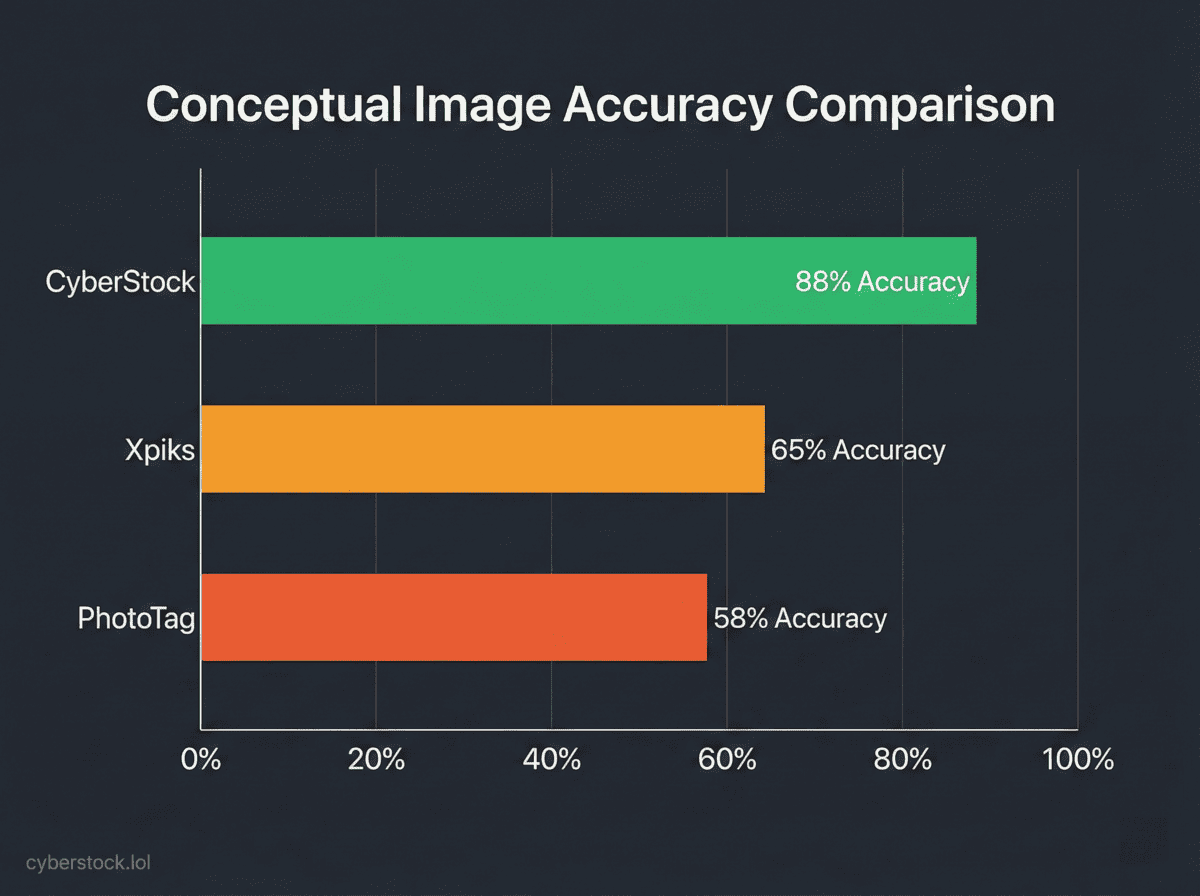
Conceptual keyword accuracy | Moderate (65% avg) | High (88–94% avg) |
Buyer demand intelligence | None | Selling Score (Green/Red per image) |
Adobe Stock CSV (auto) | Manual arrangement | Auto: 45-kw limit, priority sort, UTF-8 BOM |
Adobe Stock first-10-kw ranking | Not managed | Auto sorted by commercial relevance |
Restricted keyword filter | No | Yes (brand names, artist names) |
FTP multi-platform upload | Yes (core feature) | Via CyberPusher (coming soon) |
IPTC/EXIF metadata embed | Yes | No (CSV export only) |
EPS vector support | Yes | JPEG/PNG/TIFF/AI preview |
Model release management | Yes | No |
Batch size limit | Unlimited (local) | Up to 10,000/folder |
Pricing model | $7–$10/month (Pro/Pro+) | One-time credit packs (LTD) |
Platform | Desktop (Windows/Mac/Linux) | Web-based (cloud) |
The table makes the complementary relationship clear. Xpiks is strong where CyberStock is weak: FTP uploads, IPTC embedding, EPS vector metadata, model release management. CyberStock is strong where Xpiks is weak: keyword commercial intelligence, market demand scoring, automatic Adobe Stock compliance, and buyer-intent keyword generation at scale.
Three Scenarios: When to Stick With Xpiks, When to Switch, and When to Use Both
Stay With Xpiks If…
Your primary value from Xpiks is the multi-platform FTP upload workflow. If you've spent time configuring your agency connections, have a library of keyword presets, and your keywording happens to be already strong, switching tools to solve a problem you don't have is the wrong call. Xpiks' upload infrastructure is mature, reliable, and saves real time for contributors who upload to 6–10 agencies simultaneously. The AI keywording is a secondary feature — if you're not using it or you're satisfied with the output, the core upload value proposition is not affected.
Switch (or Add CyberStock) If…
You're using Xpiks' Auto Keywording and noticing that your images are getting approved but not generating significant downloads. This is the specific symptom of a keyword quality problem — your metadata is probably technically accurate but commercially inactive. You're also likely to benefit from switching if you're uploading AI-generated content at volume, where Xpiks' visual recognition model performs poorly on conceptual and abstract imagery.
The migration path: continue using Xpiks for everything except AI keywording. Use CyberStock to generate keywords, then import the CyberStock CSV output back into Xpiks via its CSV import feature (available in Pro+ tier). Your upload workflow stays intact; your keyword quality gets the commercial intelligence layer it was missing.
Use Both — The Optimal Configuration
The highest-performing workflow for a serious contributor right now is: CyberStock for keyword generation (buyer-intent keywords, Selling Score, automatic Adobe Stock compliance) → export CSV → import into Xpiks → FTP upload to all agencies simultaneously. This combines CyberStock's market intelligence with Xpiks' upload infrastructure. The two tools don't overlap in their core strengths; they solve different problems in the same workflow.

This changes when CyberPusher launches — CyberStock's integrated multi-platform uploader will handle the FTP/submission layer directly from within the CyberStock workflow. At that point, the Xpiks dependency for upload management goes away, and the migration path becomes simpler. Contributors who are comfortable with the current hybrid approach have no urgency to change until CyberPusher is available.
What About StockSubmitter, Wirestock, and Other Alternatives?
A complete Xpiks alternative comparison should briefly address the other tools contributors frequently consider.
StockSubmitter is functionally similar to Xpiks — desktop software with multi-platform upload and metadata management. The AI keywording module has the same visual recognition limitations as Xpiks. It's Windows-only, which is a dealbreaker for Mac/Linux users. Not a meaningful upgrade over Xpiks for most contributors.
Wirestock is fundamentally different from Xpiks: it's a submission aggregator that uploads to agencies under Wirestock's own contributor accounts rather than yours. This structure has significant drawbacks: Wirestock takes 15% of all royalties (ongoing, not one-time), approval goes through a second review layer which adds weeks of delay, and your content isn't building history under your own account name. Avoid Wirestock unless you genuinely have no time for any submission management and 15% is an acceptable cost for full outsourcing.
ImStocker is a lesser-known but legitimate alternative to Xpiks with decent desktop upload features and a slightly more modern UI. AI keywording quality is roughly comparable to Xpiks' level. Not a significant upgrade for the keyword quality problem.
The Bottom Line
Xpiks is not broken software that needs to be replaced. It's excellent at what it was designed to do in 2014, and those things — managing local files, embedding IPTC metadata, uploading to multiple agencies via FTP — are still relevant to many contributors' workflows.
The reason to look beyond Xpiks is specific: if your keyword quality is holding back your download rate, Xpiks cannot fix that with its current AI keywording model. The gap between visual recognition keywords and buyer-intent keywords is where most contributors' income is being lost, and no update to Xpiks' visual recognition model addresses the fundamental difference in training data. CyberStock's buyer-data approach solves this problem, either as a replacement for the keywording step or as a complementary tool in the existing Xpiks workflow.
Test CyberStock's keyword quality on your own images: cyberstock.lol — upload a batch, compare the output to what Xpiks generates. The difference in commercial relevance is visible in the first batch.